Showing posts with label retirement. Show all posts

Saturday, 24 September 2011

Connecting Generational Norms, Culture and Personality with Development

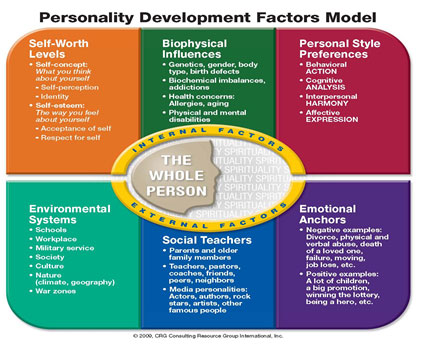
Our friends at BC HRMA have published an interesting model about the link of various environmental and personal factors with professional development.

There are a huge amount of developmental options for employers to choose from and in order to be cost effective our organizations are constantly looking to fine tune selections to hit the broadest audience possible in terms of applicable programs. The most cost effective approach to employe development is having standardized processes, access options and alignment to organizational and personal goals.  However, given the growing demographic changes to our working populations, our clients need to also recognize how this change impacts the effectiveness of our current development systems.


There is general acceptance that a larger than expected amount of baby boomers are delaying retirement.  But are current development options effective for this group of employees who remain employed for very different contextual reasons than those of mid or jr. career levels? And how can organizations continue to ensure that this valued older workforce be developed to successfully manage through the ever increasing rate of change? 

The re-framing developmental options for organizations has begun.   And it is important to begin this discussion if it has not already been tabled.  Specifically, are we addressing the critical need to proactively ensure that the top band of experienced and aging staff are effectively developed?  That they are developed to ensure we meet both their more specialized needs and our organizational goals?

Wednesday, 14 September 2011

How Accurate are Your Retirement Projections?


Many organizations are struggling with the multiple impacts of the economic downturn on business continuity.  Part of that continuity is our capacity to effectively project our workforce needs within the next 3, 5 and 10 years and this is an area that has many impacts due to the recessionary climate. Canada's economic outlook is good, however statistics are emerging on various demographic groups who have decided to delay their retirement.  Given the compounded issues regarding the health industry in the US, this tendency to delay retirement is predicted to be even more dramatic than in Canada. Media outlets are actively promoting this trend. 

A key question for those of us entrusted with creating as accurate as possible projections of natural attrition is: if the models used for these projections are pre-2009, are they still viable?  Both projection and psychological models for retirement potential are being revised, which is good news for us.   Key drivers for this decision such as pensions, RRSP and 401k plans are under constant change  as are legislative changes such as the removal of the mandatory retirement age. 

The impact on retirement projection changes have a huge HR system-wide effect in terms of the fluidity of people and how to transfer skills and innovation in organizations.  Clarifying and updating who will be leaving and when, based on the emerging data, is a critical starting point in industries with aging workforces who have yet to translate these changing factors into their retirement projections.